
 Español
  Português PT
Intel Changes Socket Again in 2026: Is Your Motherboard Obsolete Before Your CPU Reaches Its Limit?
- 01 Jun, 2026
- Home , News
- 0 Comments
Intel Changes Socket Again in 2026:
Is Your Motherboard Obsolete Before Your CPU Reaches Its Limit?
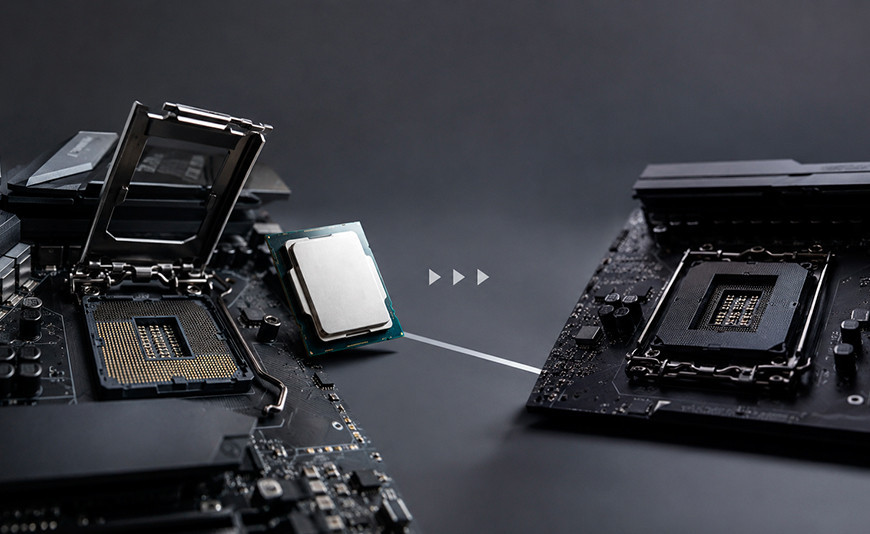
Intel has used four desktop sockets in less than six years. AMD has used two in nine. And now Intel confirms a fifth socket, the LGA 1954, for its upcoming Nova Lake processors expected in late 2026 or early 2027. This means the motherboard you bought one or two years ago may not be compatible with the next Intel processor you want. This guide explains exactly what's happening, what it means for your current build, and how to avoid the most expensive mistake in PC hardware.
The essentials: the socket change nobody expected this soon
Intel moves to LGA 1954 with Nova Lake. The next Intel Core Ultra 400 Series processors, based on the Nova Lake architecture and manufactured on the Intel 18A node, will use the new LGA 1954 socket. This makes current LGA 1851 motherboards incompatible with next-generation CPUs.
AMD remains committed to AM5 through at least 2027. AMD has publicly confirmed support for the AM5 socket through at least 2027, with compatibility also planned for Zen 6. Anyone buying an AM5 motherboard today is guaranteed at least one more processor upgrade without changing platforms.
Intel has used four sockets since 2020. LGA 1200, LGA 1700, LGA 1851, and now LGA 1954. In that same period AMD has used just one: AM5, launched in 2022 and set to remain active through at least 2027. The difference in upgrade cost for users is enormous.
But Intel has been listening. There are signs Intel wants to change this dynamic. The company is exploring a long-term socket support strategy similar to AMD's. If it succeeds with LGA 1954, this could be Intel's last socket change for several years — but that still remains to be confirmed.
There is a pattern that repeats itself in the PC world year after year, and most users learn it the hard way: you buy an Intel motherboard, a year later a new processor comes out that catches your eye, and when you go to buy it you discover it needs a different socket. Your board is useless. Your investment too. You have to start over on the platform or stick with the processor you have.
In 2026 that situation is repeating itself again. Intel is launching Nova Lake processors, its next major generation, with a new LGA 1954 socket that makes all current LGA 1851 motherboards incompatible. Meanwhile AMD continues with its opposite strategy: the same AM5 socket since 2022, with confirmed support through at least 2027 and likely also for Zen 6. The difference between both strategies is not just technical — it's financial, and it directly affects how much it will cost you to keep your PC up to date over the next few years.
1. Intel's socket history: four changes in six years
To understand the scale of the problem you need to see the full timeline. Intel has changed its desktop socket four times since 2020. Each change has meant that users wanting to upgrade their processor to the new generation also had to buy a new motherboard — in many cases also new RAM (the DDR4-to-DDR5 jump was especially painful) and reconfigure their cooling solution if the new socket wasn't compatible with the previous one.
| Intel Socket | Launch Year | Compatible Processors | Lifespan |
|---|---|---|---|
| LGA 1200 | 2020 | Core 10th & 11th Gen (Comet Lake, Rocket Lake) | 2 generations |
| LGA 1700 | 2021 | Core 12th, 13th & 14th Gen (Alder Lake, Raptor Lake) | 3 generations |
| LGA 1851 | 2024 | Core Ultra 200S Series (Arrow Lake) | Expected: 1 to 2 generations |
| LGA 1954 (new) | 2026 / 2027 | Core Ultra 400 Series (Nova Lake) | To be confirmed. Intel promises longevity |
The table says it all. If you bought an LGA 1851 board today to build with Arrow Lake, at best you'll be able to run one or two more Intel generations before it's time to change platforms. At worst, Nova Lake arrives earlier than expected and your board is obsolete in under two years.
2. AMD and the AM5 socket: the opposite strategy that's winning users over
AMD has spent nine years proving that things can be done differently. The AM4 socket, launched in 2017, supported eight distinct processor families from Zen 1 through Zen 3, spanning generations from 2017 to 2020, and continued receiving new processors through 2026. That means someone who bought an AM4 board in 2017 could upgrade to a 2020 processor without changing absolutely anything else but the CPU.
AMD AM5 vs Intel LGA 1851: Platform Comparison 2026
Confirmed CPU Support
AMD AM5: Ryzen 7000, 9000, and Zen 6 confirmed. Support through at least 2027. Intel LGA 1851: Arrow Lake. Nova Lake will use LGA 1954, incompatible.
Overclocking Without Restrictions
AMD allows PBO on all AM5 boards, including mid-range B650 and B850. Intel restricts multiplier-unlocked OC exclusively to Z890 boards, the most expensive in the lineup.
Optimal Memory
Both platforms are DDR5-only in 2026. AMD performs best at DDR5-6000 due to Infinity Fabric synchronization. Intel has more headroom with higher speeds without latency penalties.
Sources: Newegg Insider: AMD vs Intel Motherboards 2026 · XanxoGaming: Intel and socket longevity · XDA Developers: Intel Nova Lake and AM5
3. Nova Lake: what Intel is preparing for 2026 and 2027
Nova Lake is the codename for Intel's next major desktop processor generation. It is scheduled for Q4 2026 or Q1 2027 and represents a real architectural leap after several generations of incremental improvements. The most significant thing about Nova Lake is not just its performance, but what Intel has promised will come with it.
What we know about Nova Lake so far
Intel 18A manufacturing node: Intel's most advanced fabrication process to date, featuring RibbonFET transistors and PowerVia. Expected to recover the competitive edge against the TSMC N3 node AMD currently uses.
Up to 52 cores on the flagship model: Rumors point to an unprecedented core configuration for desktop, with total cache close to the ~200 MB AMD offers on its 3D V-Cache models.
LGA 1954 socket: New socket incompatible with current LGA 1851 boards. Intel has promised this socket will have a longer lifespan than previous ones, moving closer to AMD's AM5 philosophy.
Why Intel has decided to change strategy
Market pressure has been enormous. Users and specialist media have been criticizing Intel for years for forcing a motherboard change with every generation. The degradation scandal affecting 13th and 14th Gen processors further eroded trust.
AMD, meanwhile, has been capitalizing on exactly that message: "with AMD you don't have to change the board every year." And it has worked. AMD's market share in desktop processors has grown significantly over the past three years.
Intel has listened and is changing course. But the change comes with Nova Lake, which means current LGA 1851 boards are in practice a short-lived bridge platform.
4. What all this means for your current build or next purchase
The current situation can be summarized in three concrete scenarios depending on where you stand right now:
Your situation and what you should do
You have an Intel LGA 1851 board (Arrow Lake)
Your board is compatible with current Arrow Lake processors and with the Arrow Lake Refresh arriving in the first half of 2026. When Nova Lake lands, you'll need a new board. It's not a disaster, but it's worth knowing before planning future upgrades.
You have an AMD AM5 board (Ryzen 7000 or 9000)
You're in the best possible position. Your board is compatible with current Ryzen 9000 processors and AMD has confirmed compatibility with Zen 6, the next generation. When the new Ryzen arrives, you just swap the processor. The board, RAM, and everything else stays put.
You're about to build a new PC
If you want to invest in a platform with a future and a real chance to upgrade your processor without replacing everything, AMD AM5 is the safest option right now. If you prefer Intel, wait to see what they confirm about LGA 1954's longevity before committing to LGA 1851.
5. What never changes even when Intel changes sockets: the case and PSU
There is a silver lining in this scenario of shifting platforms and obsolete sockets: not all hardware is held hostage by Intel's and AMD's decisions. The case, the power supply, and the fans are components that survive every platform change without losing an ounce of utility.
The case is the longest-lived component in any build. A good ATX mid-tower case like the Hiditec BLOK is compatible with ATX and Micro-ATX motherboards regardless of whether they use Intel LGA 1851, LGA 1954, or AMD AM5. It doesn't matter if Intel changes sockets five more times: the ATX form factor standard for motherboards has been the same for decades and that's not going to change. Your investment in a good case is the most durable investment in your entire build.
The case: 10 years of real-world lifespan
The ATX, Micro-ATX, and Mini-ITX form factors have been industry standards for decades, and there is no movement in the industry pointing to a change. A case compatible with ATX bought today will be compatible with motherboards five years from now, whatever socket they use.
The Hiditec BLOK supports ATX and Micro-ATX boards, fits GPUs up to 350 mm, has room for a 240 mm liquid cooler, and features rear-chamber cable management. All of that will remain just as useful with Intel's next socket.
The ATX 3.1 PSU: ready for whatever comes next
The ATX 3.1 standard with PCIe 5.1 is the power connector that next-generation GPUs will need regardless of the platform you use. A PSU meeting ATX 3.1 today will still be the right PSU when Nova Lake and next-gen graphics cards arrive.
The Hiditec BZ PRO PSUs available on Amazon meet the ATX 3.1 standard with PCIe 5.1, making them compatible with any GPU or CPU arriving in the coming years regardless of which socket Intel or AMD decide to use. You can browse the full range at Hiditec power supplies.
6. What should I buy today to avoid regret tomorrow?
With all the information on the table, here is the practical decision guide for different buyer profiles in 2026:
| Profile | Recommended Platform | Reason |
|---|---|---|
| Pure gaming, want to upgrade the CPU in 2 or 3 years | AMD AM5 | Confirmed support through 2027, Zen 6 compatible, no board change needed |
| Gaming and content creation, want the best right now | AMD AM5 (Ryzen 9 9950X) | Best multi-core platform with a guaranteed future |
| Competitive gaming, max FPS in titles like CS2 or Valorant | AMD AM5 (Ryzen 7 9800X3D) | Best single-core gaming CPU on the market with a long-lived platform |
| I want Intel and don't mind changing the board in 2 years | Intel LGA 1851 (Arrow Lake) | Solid current platform, knowing Nova Lake will require a board change |
| I want Intel with a future, happy to wait | Wait for LGA 1954 (Nova Lake, 2026/2027) | Intel promises longevity with this socket. Better to enter at the start of the cycle |
Frequently Asked Questions about Intel and AMD Sockets 2026
Everything you need to know about platform compatibility before you buy
Is my LGA 1851 motherboard compatible with Intel's Nova Lake processors?
No. Intel's Nova Lake processors will use the new LGA 1954 socket, which is physically different and incompatible with current LGA 1851 boards. If you have an LGA 1851 board today, you can use it with current Arrow Lake processors and with the Arrow Lake Refresh arriving in the first half of 2026, but not with Nova Lake. To use a Nova Lake processor you will need a new motherboard with the LGA 1954 socket.
How long does AMD's AM5 socket have support?
AMD has officially confirmed support for the AM5 socket through at least 2027, with planned compatibility for Zen 6 processors — the next generation of Ryzen after the current Ryzen 9000 (Zen 5). There are indications that support could extend to 2028 to also include Zen 7. This means anyone buying an AM5 board today is guaranteed at least one full processor upgrade without changing platforms.
Does the socket change affect the case or power supply?
No. The socket is the physical interface between the processor and the motherboard, and has no effect whatsoever on the case or power supply. The ATX form factor for motherboards has been the same standard for decades and no change is expected in that regard. An ATX case bought today will remain compatible with LGA 1954 motherboards when they arrive. The same goes for power supplies that meet the ATX 3.1 standard: they are compatible with any platform regardless of socket.
Is it worth buying Intel LGA 1851 now or should I wait for LGA 1954?
It depends on how long you plan to stay on the same platform. If you need a PC now and have no intention of upgrading the processor in the next two years, LGA 1851 with Arrow Lake is a solid, well-supported platform. If you want a platform with an upgrade path, the smartest move is either to wait for LGA 1954 with Nova Lake, or to go with AMD AM5 now, which has confirmed support through 2027 and likely beyond.
What components can I reuse when changing Intel platforms?
When moving from LGA 1851 to LGA 1954 you will be able to reuse: the case (ATX is the same standard), the power supply (if it meets ATX 3.1), the GPU, NVMe and SATA SSDs, case fans, and the CPU cooler if the new socket is compatible with your current cooling solution (check with the manufacturer). What you won't be able to reuse is the motherboard and, very likely, the RAM if Intel changes the optimal DDR5 speed requirements between platforms. That's why it makes sense to invest now in the most long-lived components — the case and PSU — and treat the processor and motherboard as the most consumable parts of the build.
Sources:
- XDA Developers: Intel Nova Lake and the socket longevity strategy (April 2026)
- XanxoGaming: Intel considers AMD-style socket support (March 2026)
- Newegg Insider: AMD vs Intel Motherboards 2026 — platform architecture compared
- Geeknetic: Intel Arrow Lake Refresh and Nova Lake — 2026 roadmap
- PasionMóvil: Intel shifts strategy toward long-lived sockets (March 2026)
- VGTimes: Intel to switch to new LGA 1954 socket in 2026
- Hiditec Blog: CPU Overclocking in 2026 — what Intel and AMD don't tell you
- Hiditec Blog: Complete PC component compatibility guide 2026
- Hiditec: BLOK ATX mid-tower case (technical specs)
- Hiditec: Full range of ATX 3.1 power supplies
- Amazon Spain: Hiditec BZ PRO ATX 3.1 PCIe 5.1 PSUs



Leave a Reply Cancel Reply